I regret not posting more this past summer. I used Facebook for photos and short commentary, but found it limiting for my purposes. Facebook is fine as a bulletin board, but for serious writing on gardens it is deficient. Some things only a blog can do.
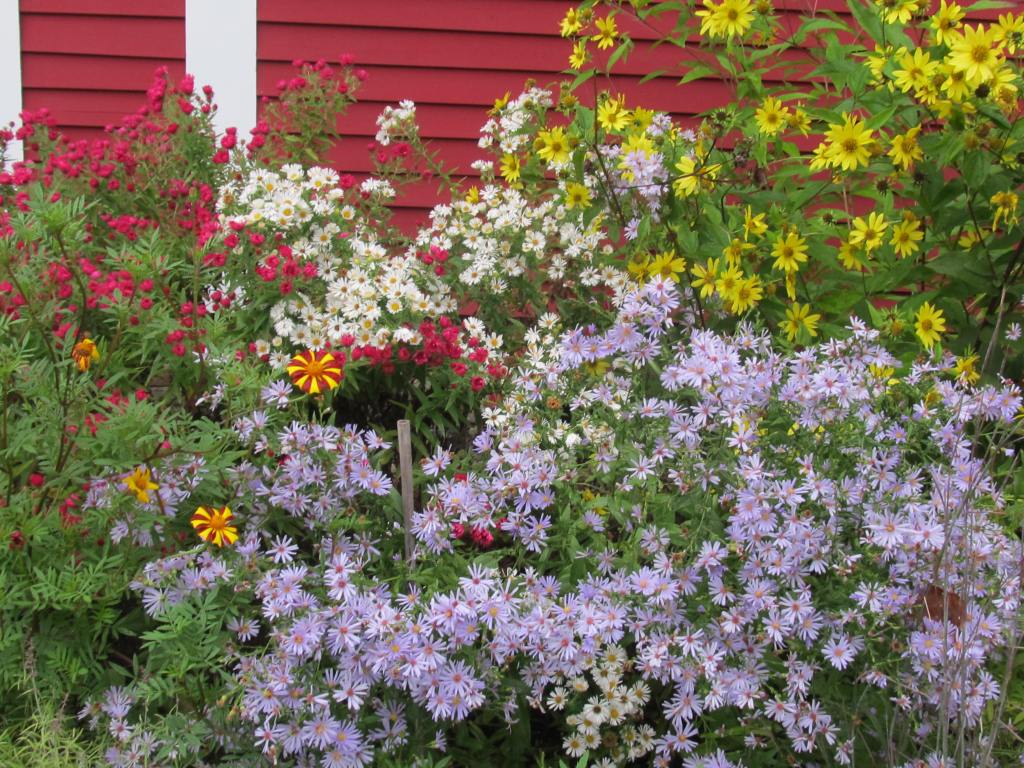
Above is the fall border of asters at the Goffstown Historical Society this autumn. On my next post when I am not writing so late at night I will add more of the scenes from July to October.
Since the garden is now sleeping ,I think I will write on some other topics through the winter, including cooking and reading, my two off season passions.
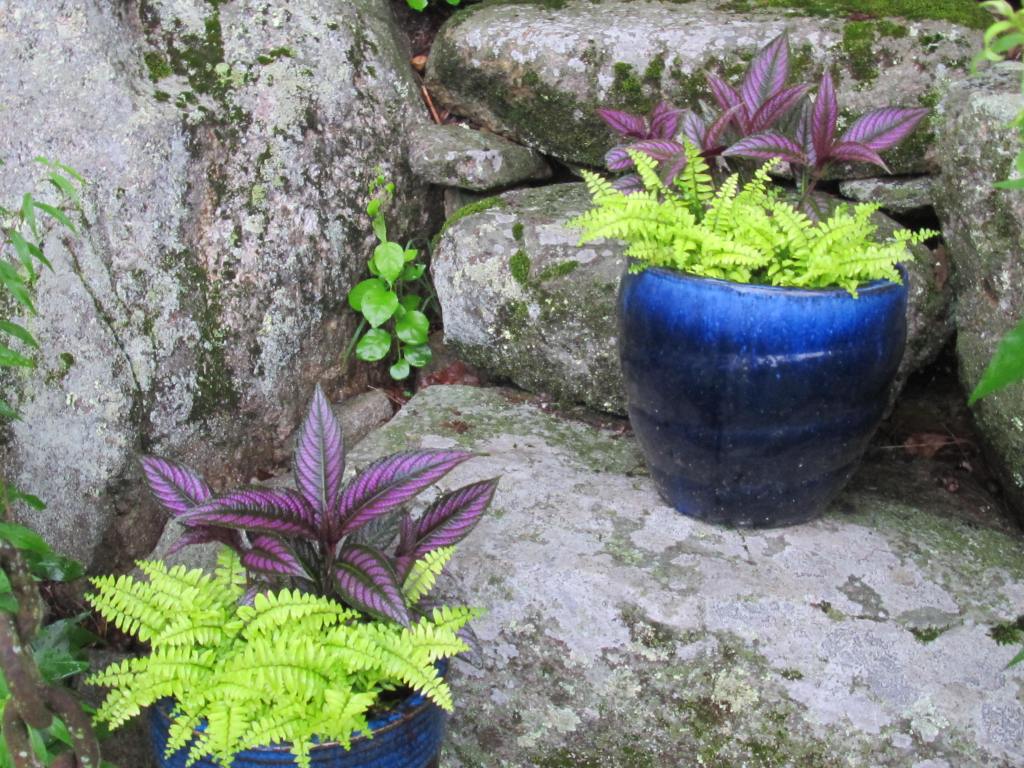
This was photographed today just before our now daily rain started. Once these steps led to a small courtyard behind the Historical Society building. The courtyard has now gone under a smothering blanket of barberries, weeds, and creepers. The steps were cleared of weeds, and white wood asters, heart leaved asters, and the blue stemmed goldenrod were left in place.
The steps have a mysteriousness to them. They have the look of a lost garden in Italy-
The two planters were designed by Marian from Rochester NH, a volunteer at the Gardens.
Years ago at a Perennial Plant Society meeting in Nashville one of the high end local designers gave a talk, and the most memorable thing he said was ” If someone makes fun of you for having orange daylilies in your garden your response to this should be ‘It’s MY garden’. “
This is true. And if you want four hundred bearded irises, dozens of peonies, and daylilies alone you should plant what you want. Your garden is private space.
The old orange daylily is one the spirits of the New England , whether it has gone feral at a woodland verge, planted along white picket fences, or wandering along the back roads like the vagabond it is. I love it.
Yet in the flower beds at the Goffstown Historical Society there are few daylilies. Not planting them en mass was deliberate, for while daylilies are supreme in American gardens and seen everywhere and home gardeners collect them and gas stations plant them in islands , I will paraphrase the late Henry Mitchell and say that I believe that daylilies are like ultimatums and should be used sparingly. And I have planted accordingly.
Where grooming is next to Godliness in a garden, daylilies are daily work. Their leaves yellow, their blossoms must be deadheaded , and if they have been planted in squads in the middle or rear of a public garden someone has to wade into the garden to clean them, imperiling all else that grows.
They also believe in Manifest Destiny. Their clumps know no boundaries and soon the garden is theirs while their clumps drag along vetch and grass and rumex with them.
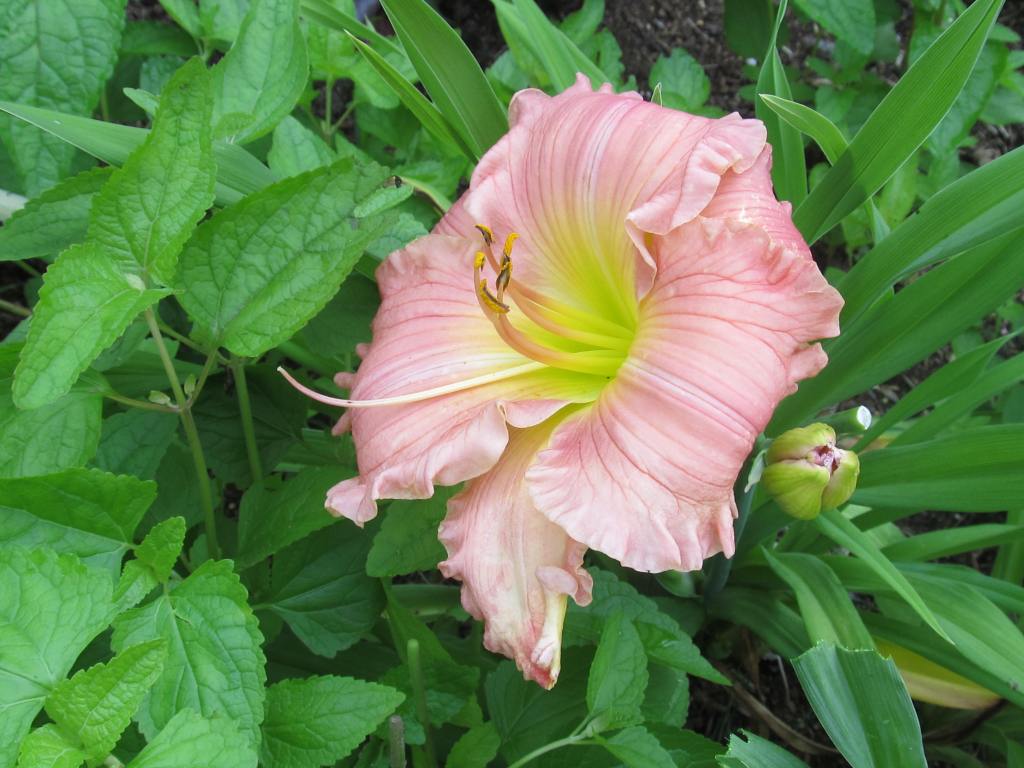
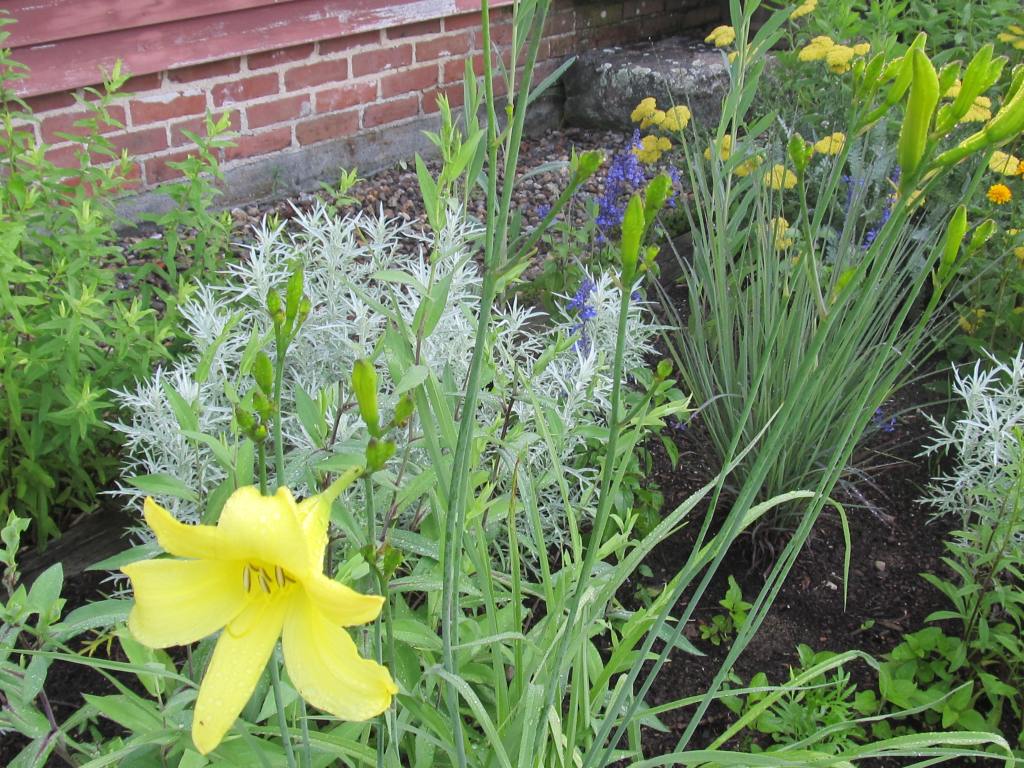
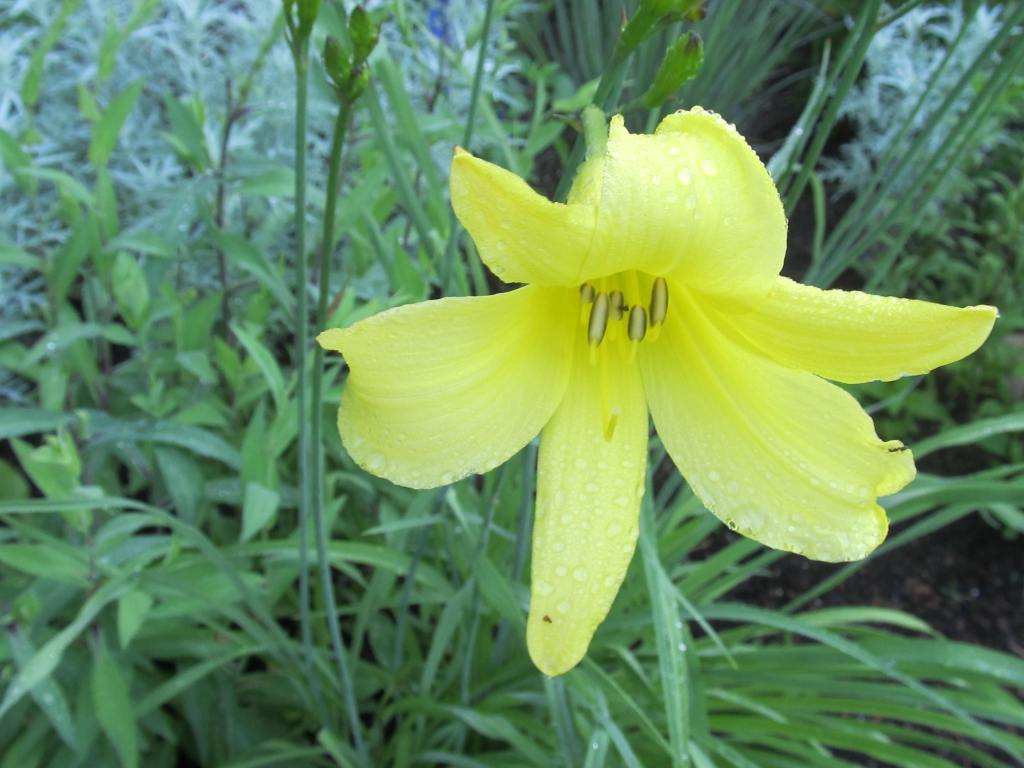
The daylily in the photo above is “Jolene Nichole”. She is planted in our Sunset garden bed. She would be perfect if her flower was in proportion to her size, which is dwarf, but her color is so fine she keeps her place. I also have clumps of a brick colored variety in both porch beds. It was the only plant in the garden when I renovated it other than some forgotten white irises. The iris are gone, but I kept the lily. I also added the heirloom yellow daylily I posted about recently.
I confess that I have been tempted by the daylily catalogues. By the cantaloupe and salmon colors. By the frilly daylilies the color of orange sherbet-.
I do not indulge because I can see these anywhere. I see them as I see private gardens and as I look at the photos posted on garden club web pages posted by infatuated owners.
Though the daylily is now in undisputed ruler of American gardens, I wish that my fellow gardeners could look beyond daylilies into the beauty of asters, goldenrods, persicarias, patrina, and the hardy old time chrysanthemums. To give some space to heirloom cannas, to Kiss-me -over -the garden gate and the old timey garden Balsams.
How impoverished are our gardens when we see only the expected.
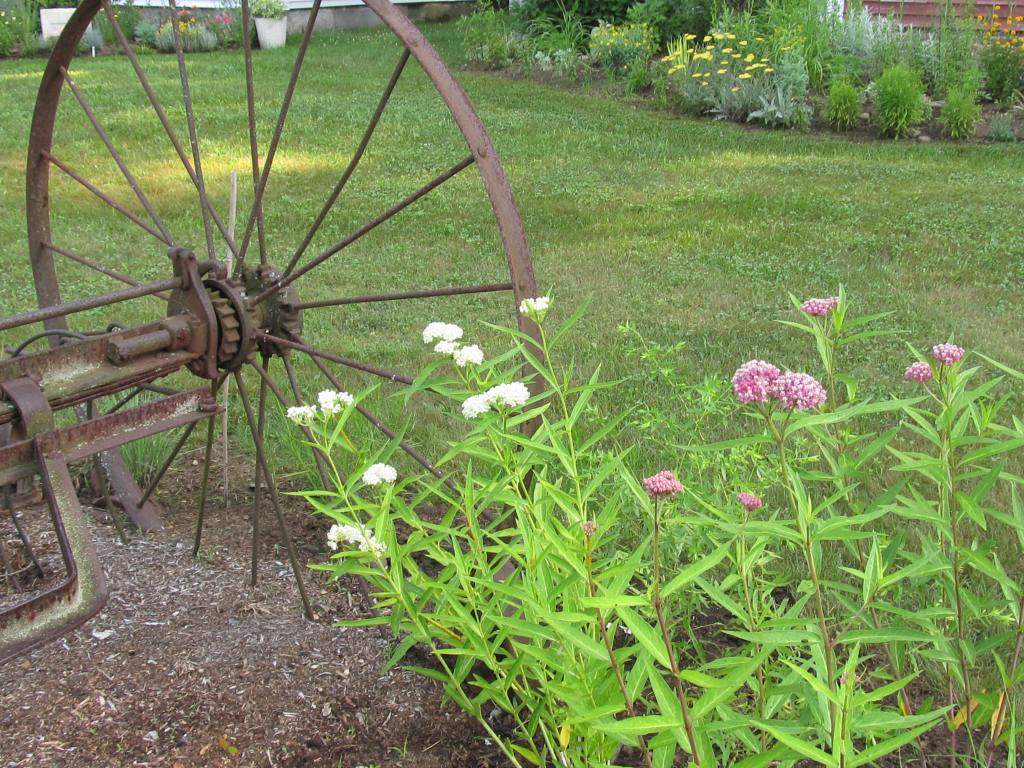
The above is a photo of the Swamp milkweeds in the new Modified Meadow “Robert Frost Tuft of Flowers garden”. The planting surrounds rusted iron antique farm machines.
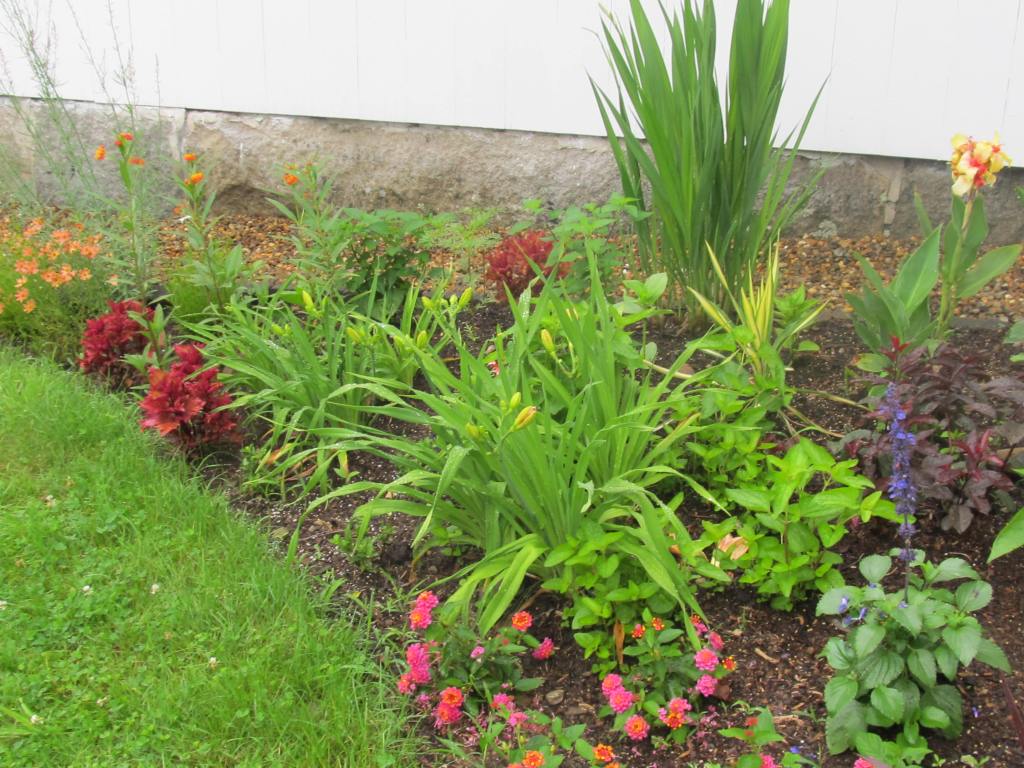
The freest plantings in the Goffstown gardens are the Sunset color gardens along the main porch of the museum and the Wait Station garden on the property line.
There are no rules there, no ideologies, no plant politics. No color is forbidden. I do not care if a plant comes from New Boston’s fields or Mexico’s Sierra Madre. I hold with Gertrude Jekyll, who did not care if a flower was tender or hardy as long as it is handsome and and “puts on a brave show when a brave show is wanted”. The feral orange daylilies bloom on the verges of the garden, for I have no quarrel with them. There are the new persicarias from European gardens and the balsams and petunias from the old days. Colors mingle and though certain jolting colors suddenly appear, it is in general, a peaceable kingdom.
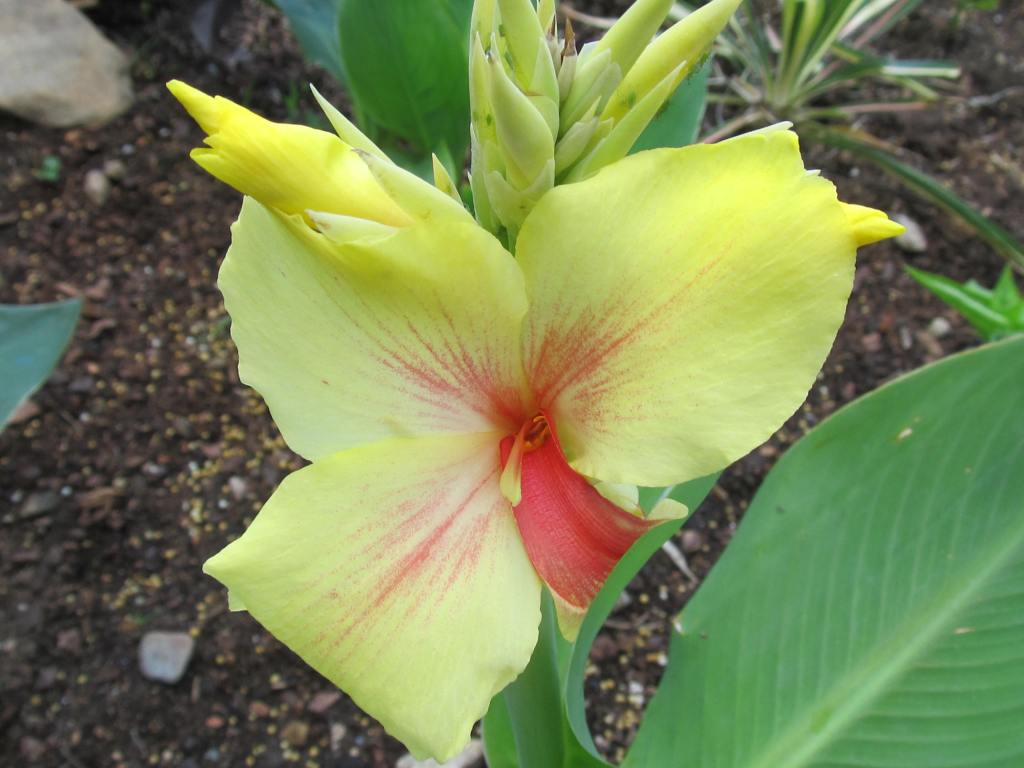
Louise Beebe Wilder wrote that too many rules and too much timidity about color leads to a “wearisome suavity”. To my mind peonies and iris and Shasta daisies are the expected “Dream Garden”, not the Dream garden of the mysterious, and the fanciful and the unexpected. Give me the shrub fuschias and sherbet colored cannas. Let me never fear the colors of red or yellow or the speedy spread of our native hardy ageratum.
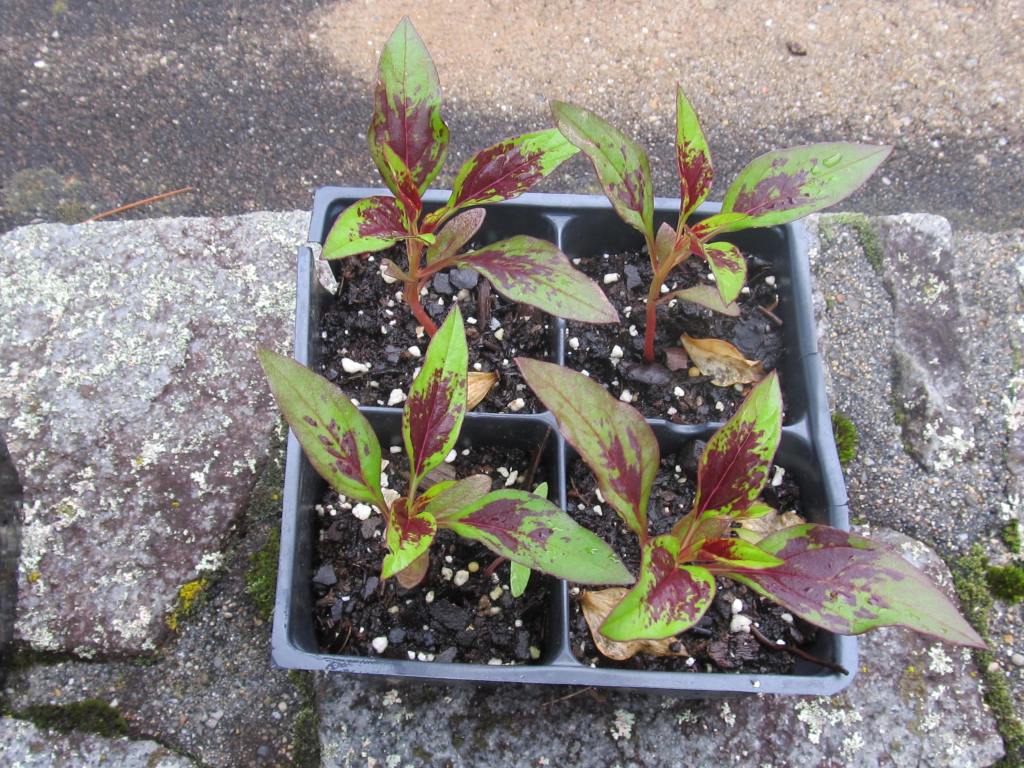
I have tried repeatedly to buy this plant from Annie’s Annuals in California, but it is always sold out. It is a tall spike celosia with resplendent ruby splotched leaves and pink flowers. Since I could not find the plants, I opted for seeds, and growing it has been a trial, for New Hampshire makes it nervous.
It germinated quickly, but when it found that a 70 degree room and grow lights were the best I could offer, it sulked and stayed an inch tall for a month. I moved it into my slightly warmer kitchen and put it in a large zip plastic bag for humidity. Another two weeks and it had grown a quarter inch. I bought two heating mats and put the seedlings and the plastic bags on them. The celosias went up to two inches.
I waited for warmer weather and shuffled the plants off the mats out into the sun and back in at night. There was not much warmth in May and the celosias sat still.
Now, with tropical downpours every day and temperatures rising they are expanding and I expect them to be at 5 inches soon. I hope they reach at least six feet, for I am an optimist.
Consider “Kiss Me Over the Garden Gate”, another tall tropical annual. It was six inches tall in June but seven feet in September. Miracles can happen!
A more obliging little annual is the antique cottage garden flower “Jewels Of Opar”. It has tiny spikes of red flowers followed by little sprays of reddish berries. It self seeds some places but I am not sure it will here. Like the celosias, it seeds came from Nancy Ondra in Pennsylvania.
As I write this I am waiting for the annual Parade of vintage cars out of New Boston to come up the road for their 4th of July outing. Last night just after midnight the Annual “Ghost Train” went up and down the hills of the town. It came through again at 4am, and woke me up for the day-
This is the old Parker Store in Goffstown, New Hampshire. It houses the displays and offices of the Goffstown Historical Society and is on the National Register Of Historical Sites.
The Parker Brothers sold dry goods to Goffstown, and over the years additional buildings having nothing to do with anything Parker have landed on the site. There is a small outbuilding called the Wait Station where folks working in Manchester waited for the train at the foot of the Uncannoonuc hills to the east. Orphaned by time, it ended up at the corner of Parker Road and Gorham Pond Road along with an old two room schoolhouse.
The museum has a porch that faces south. Pleasant in the morning, it is hot on summer afternoons, and when I put containers on the porch I chose durable, old fashioned plants to put in them. The gardens around the buildings are eclectic, a mixture of the antique and the Latest Thing. Forgotten annuals and trendy Persicarias bred by a Belgian landscape designer. This is not the classic New England garden.
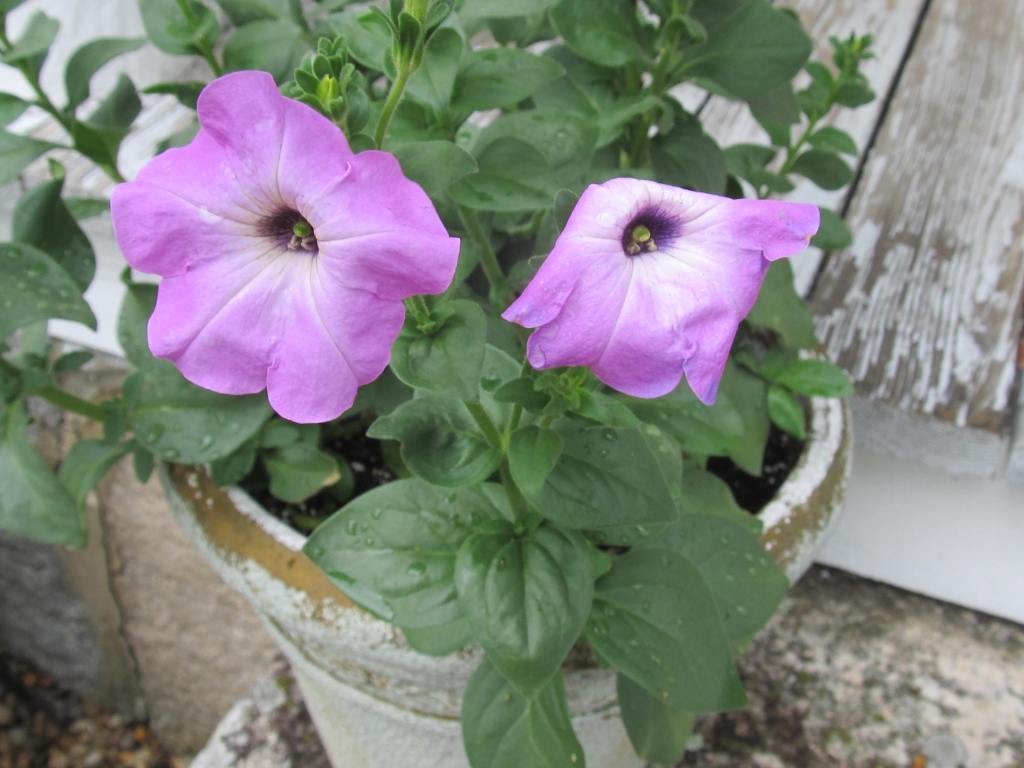
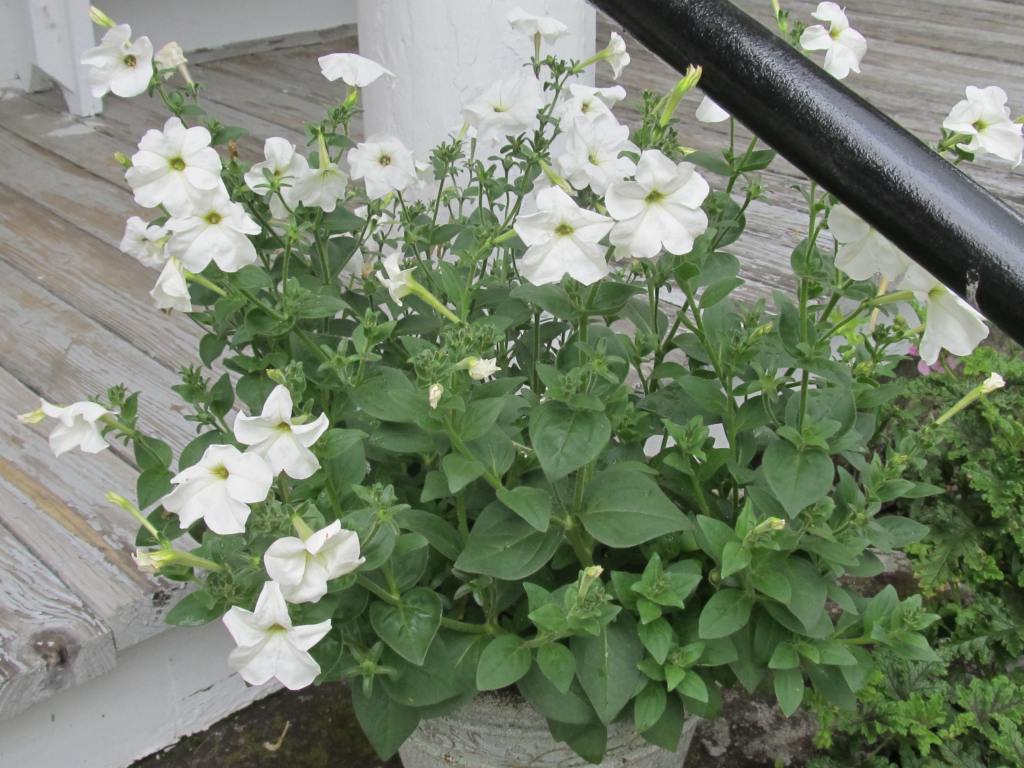
Yet on the porch I felt there should be a tip of the hat to the past, and I chose heirloom petunias “Old Fashioned Purple Vining” and the evening fragrant “Rainmaster”, both from Select Seeds.
I think the garden fits the Museum, once a store where mothers and grandmothers bought their fabrics for the dresses in the old style while their daughters dreamed of the new, the fashionable, and the latest hats and dresses from Paris and New York-
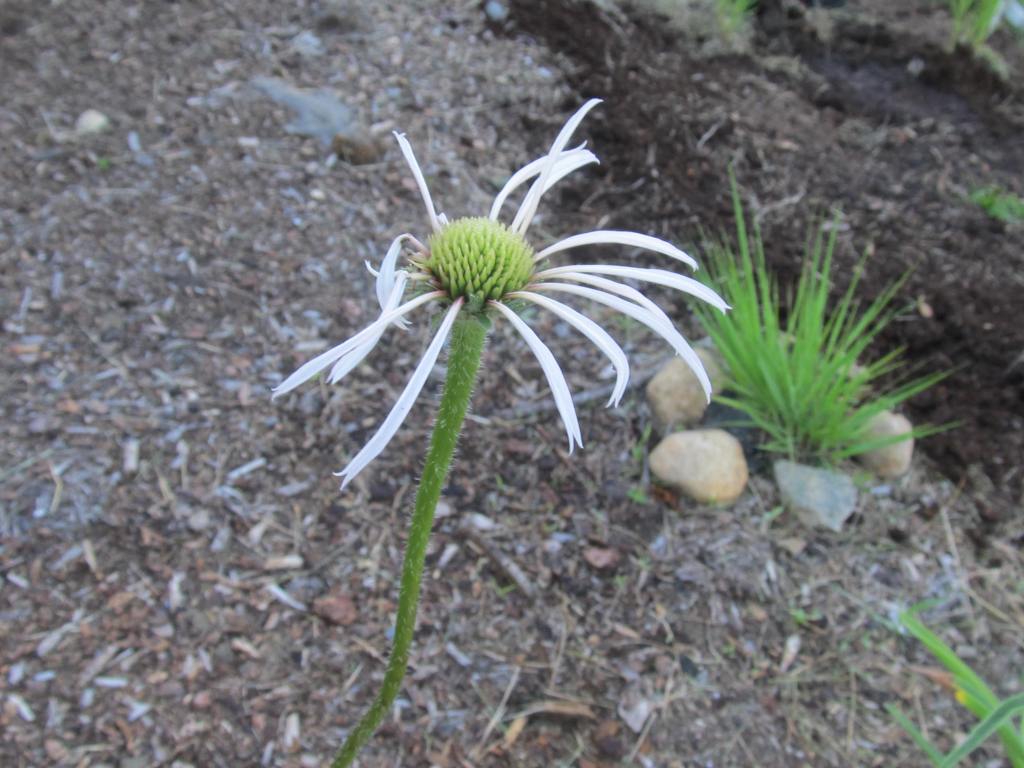
I have seen photos of large groups of this plant ,but even a close -up of one of the five I have in the Frost Garden is astonishing. From first opening to full bloom its changes are like no coneflower I have ever seen. Its Latin name is Echinacea simulata. Its common – Wavy Leaved coneflower.
The coneflowers have been manipulated and “improved” for decades. Loud colors, doubles and half doubles, even bred into the shape of pincushions.
But this prairie flower is elegant. Not all coneflowers are.
Here is its evolution from first opening to full bloom.
Orange comes soon in early summer when orange daylilies cover the verges and fields and the modest dooryards along country roads.
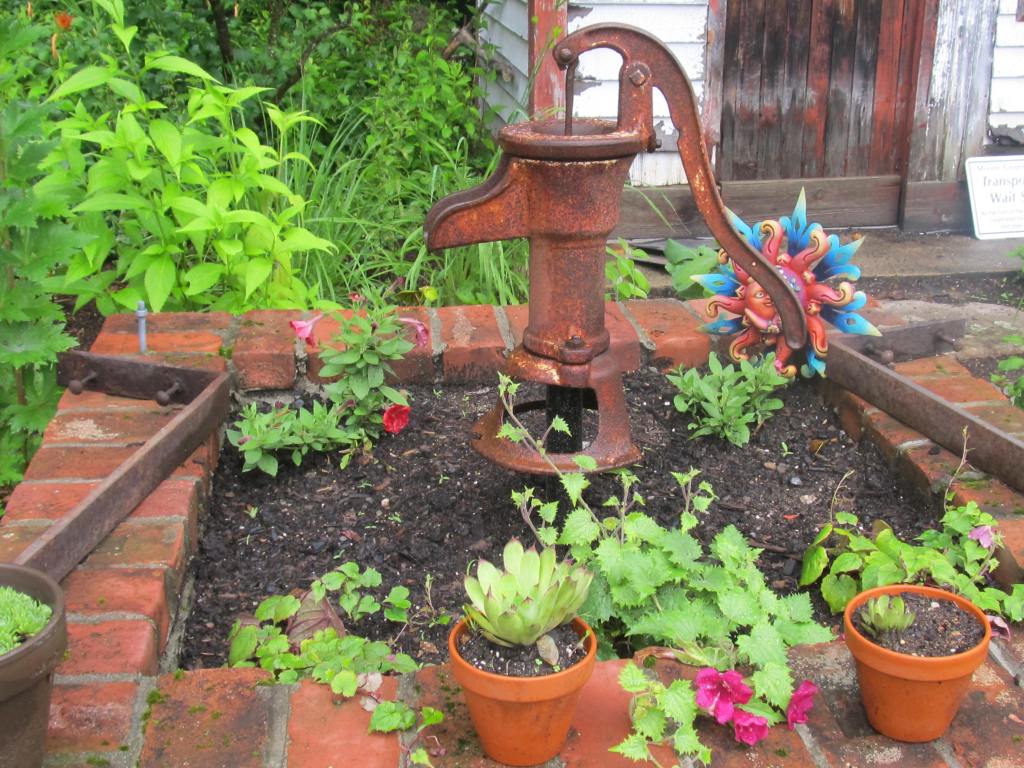
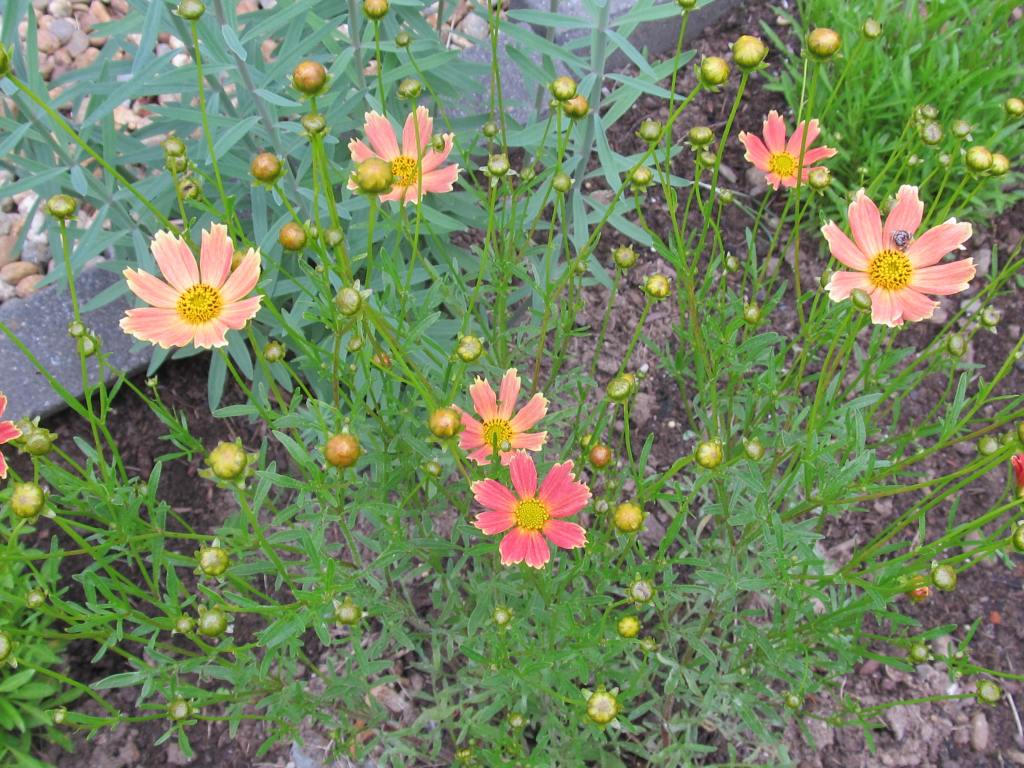
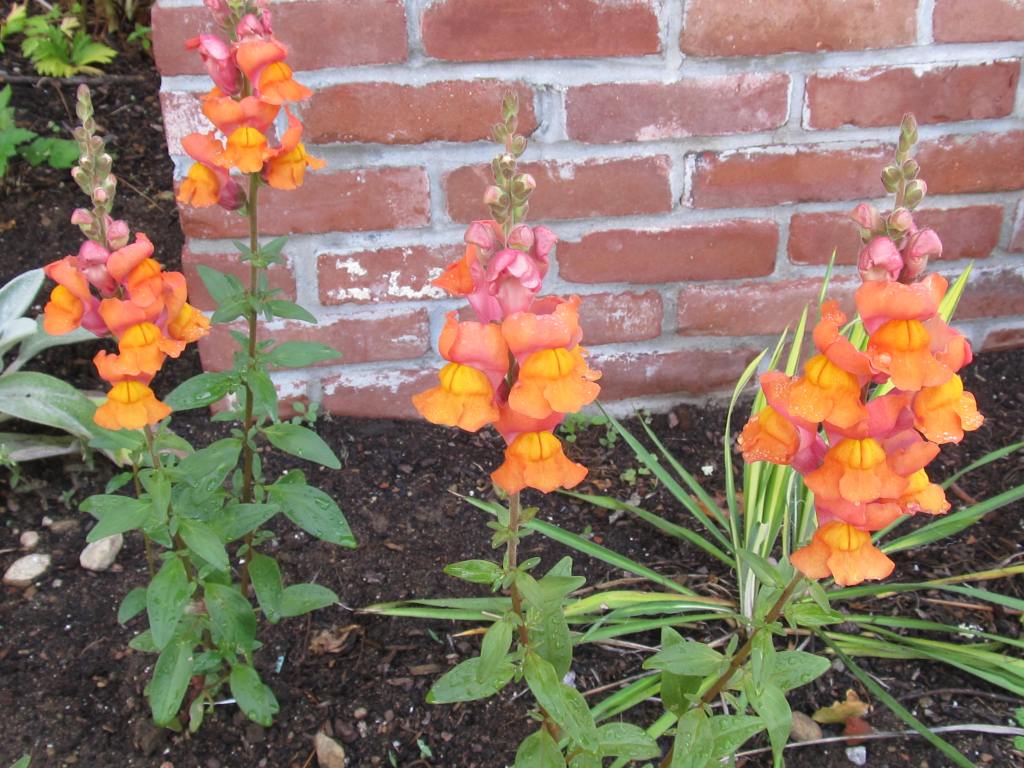
The Parker Museum has some orange blooms now. One is the snapdragon “Cool Orange”, which we planted in front of the wishing well planter with its new antique rusted handpump. The other is a coreopsis new to me,” Lil’l Bang Darling Clementine”. Quite the name, I think.
I do not fear bright color and the sunset shades, and blue, yellow and gray together. I love red as long as the blooms are not outsized. I like white if it presents as a cloud or a mist .















 Gardening On Granite